

The office furniture manufacturing sector has undergone a significant shift over the past decade. Standard ergonomic designs, once characterized simply by adjustable armrests and manual lumbar support, no longer fully satisfy the demands of commercial buyers. Corporate procurement managers, ergonomic consultants, and high-end brand distributors now seek active wellness features that address the physical toll of sedentary work. Specifically, integrating a dedicated massage for chair back assembly into executive and task chairs has transitioned from a niche luxury feature to a highly sought-after commercial option.
For seating brands and original equipment manufacturers (OEMs), adding active mechanical or pneumatic features requires a clear understanding of both biomechanics and hardware engineering. This article examines the mechanical architecture, integration challenges, and manufacturing standards required to successfully incorporate a massage for chair back system into commercial furniture portfolios. Additionally, we will explore how collaborative engineering partnerships help brands deliver reliable, durable products to the global market.
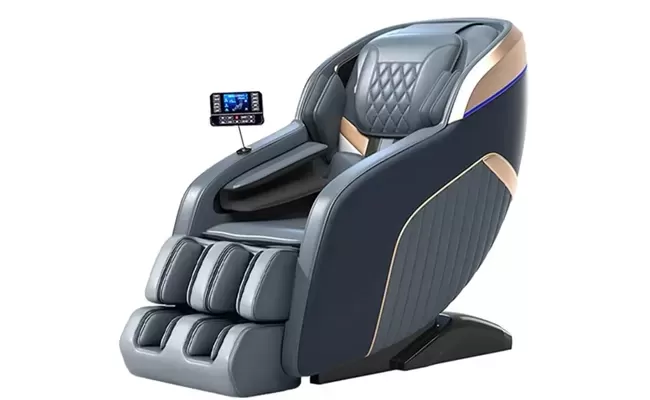
Key Component Architecture of a Massage for Chair Back Mechanism
To successfully integrate active therapy features into a standard office chair, design engineers must analyze the internal components. Unlike consumer-grade portable massage cushions, an integrated commercial system must fit seamlessly within the slim profile of an office chair backrest without compromising the chair's structural integrity or aesthetic appeal.
Mechanical Drive Systems
At the center of a mechanical massage system is the drive assembly. This consists of micro-electric motors connected to a gear train that guides the massage nodes along a predetermined path. In executive seating, this is typically an S-track or a localized fixed-point mechanism. The S-track is shaped to follow the natural curvature of the human spine, allowing the massage nodes to move vertically while maintaining consistent contact pressure against the lumbar and thoracic regions.
Pneumatic Compression Systems
An alternative to mechanical rollers is the pneumatic compression system. This setup uses an array of TPU (thermoplastic polyurethane) laminated fabric air bladders placed within the lumbar support area. A quiet micro-air pump, managed by a solenoid valve manifold, inflates and deflates these bladders in a rhythmic sequence. This creates a gentle wave-like pressure that supports the lower back and encourages micro-movements of the spine, which helps reduce muscle fatigue during long working hours.
Thermal Subsystems
To complement the mechanical movement, many commercial configurations include low-voltage carbon fiber heating elements. These heating pads are placed directly behind the outer upholstery layer but in front of the primary structural foam. Utilizing low-voltage DC power (typically 12V or 24V) ensures user safety while providing a gentle thermal therapy that increases blood flow and relaxes stiff lower back muscles.
Addressing Engineering Challenges in Office Chair Integration
Introducing moving parts, electrical wiring, and heat sources into a flexible office chair backrest creates several structural and engineering hurdles. Manufacturers must address these issues early in the design phase to avoid field failures and product recalls.
Acoustic Noise Mitigation: Standard office environments operate at low ambient decibel levels, typically between 35 and 45 dB. A massage mechanism that produces a loud hum or mechanical grinding is unacceptable in a professional workspace. Jingtuo addresses this challenge by utilizing brushless DC motors and wrapping the gear enclosures in sound-dampening high-density foam, keeping the operational noise level below 40 dB.
Power Supply and Cable Routing: Unlike traditional stationary massage recliners that remain plugged into a wall outlet, task chairs need to rotate, tilt, and roll. Running a standard AC power cord directly to the chair back creates a tripping hazard and limits mobility. High-performance designs resolve this by utilizing high-capacity, rechargeable lithium-ion battery packs integrated into the under-seat control box, or by implementing heavy-duty, coiled DC cords with quick-release magnetic connectors.
Maintaining Foam Integrity: Injecting a rigid plastic or metal massage frame into high-resiliency molded polyurethane foam can cause uneven wear and structural breakdown. The foam must be molded with a precise cavity that houses the massage for chair back chassis, ensuring there is sufficient foam thickness (typically a minimum of 30mm) between the user and the mechanical parts to prevent discomfort when the system is turned off.
Selecting the Ideal Massage Modality for Commercial Office Seating
When developing a product line, product managers must choose the massage modality that best fits their target market and price point. The three primary options each have distinct engineering requirements and manufacturing costs.
| Modality | Mechanical Requirements | Backrest Thickness Impact | Primary User Benefit |
|---|---|---|---|
| Mechanical Shiatsu Rollers | Dual-motor S-track, rigid steel guide rails, 24V power supply. | Requires a deep backrest frame (typically 120mm to 150mm). | Deep-tissue kneading that mimics manual massage therapy. |
| Pneumatic Air Bladders | Micro-air pump, multi-port solenoid valves, TPU air cells. | Slim profile (adds less than 40mm to backrest depth). | Gentle, distributed pressure that supports posture and dynamic movement. |
| Localized Vibration Nodes | Multiple eccentric rotating mass (ERM) micro-motors. | Minimal footprint; can be embedded directly within standard foam. | Lightweight, cost-effective relaxation and localized muscle stimulation. |
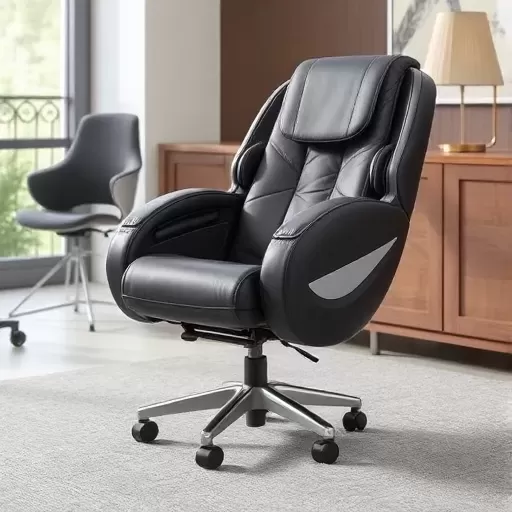
The choice between these modalities depends largely on the structural design of the chair. For thin, mesh-back task chairs, a pneumatic bladder system is often the only viable choice because it preserves the flexibility of the mesh material. For fully upholstered executive chairs, a mechanical roller or a combined roller-and-heat system offers the high-end experience that premium buyers expect.
Manufacturing and Compliance Standards for B2B Sourcing
Sourcing electronic and mechanical components for commercial furniture requires strict adherence to international safety and quality standards. Business buyers must verify that their manufacturing partners maintain appropriate certifications to ensure smooth customs clearance and minimize liability.
First, the entire electrical assembly—including the power adapter, battery pack, control switch, and internal wiring—must comply with relevant regional certifications such as UL (Underwriters Laboratories) for North America, CE for Europe, and PSE for Japan. Particular attention must be paid to the lithium battery cells, which require UN38.3 certification to ensure safe transport by air and sea.
Second, the mechanical durability of the massage unit must align with standard furniture testing protocols, such as BIFMA (Business and Institutional Furniture Manufacturers Association) standards. For instance, the backrest durability test (BIFMA X5.1) requires the chair back to withstand cyclic force applications. An integrated massage for chair back unit must be durable enough to endure these structural impact tests without structural deformation or electrical component failure.
Finally, environmental regulations such as RoHS (Restriction of Hazardous Substances) and REACH must be respected. All plastics, synthetic leathers, and circuit board solders utilized in the massage assembly must be free of harmful heavy metals and volatile organic compounds (VOCs). This is especially important for heated components, as elevated temperatures can accelerate the off-gassing of low-quality materials.
How Jingtuo Partners with Global Seating Brands
As a specialized manufacturer in the massage equipment industry, Jingtuo provides comprehensive OEM and ODM services designed to help furniture brands integrate active therapy systems into their seating lines. Our engineering team assists clients through every stage of development, from initial concept drawings to final quality assurance.
Our approach focuses on custom co-development. Rather than forcing a standard, off-the-shelf massage mechanism into an existing chair frame, we collaborate with your industrial designers to modify our modular assemblies to fit your specific frame geometry. This ensures that the aesthetic lines of your original chair design are preserved, while the structural foam and support mechanisms are optimized for maximum comfort and durability.
Quality control at Jingtuo is guided by rigorous testing. Every production batch of massage mechanisms undergoes continuous run-time testing, load capacity evaluations, and decibel level testing in semi-anechoic chambers. By maintaining complete control over our supply chain and manufacturing processes, we ensure that every massage for chair back module delivered to your assembly facility meets consistent performance standards.
Frequently Asked Questions
Q1: What is the typical lead time for developing a customized massage for chair back system?
A1: The development timeline for a customized system generally ranges from 8 to 12 weeks. This includes the initial structural analysis, 3D prototyping, safety evaluation, and initial sample fabrication. Mass production lead times typically range between 35 and 45 days after design approval and receipt of deposit.
Q2: Can these massage systems be integrated into mesh-back chairs?
A2: Yes, integration into mesh-back chairs is possible, primarily through pneumatic compression systems. Because traditional mechanical rollers require thick foam padding to cushion the user, they are not suitable for single-layer mesh. Pneumatic bladders can be designed inside an ergonomic lumbar support cushion that sits behind or integrates directly into the mesh panel.
Q3: What are the minimum order requirements (MOQ) for OEM/ODM orders?
A3: For custom mechanical or pneumatic assemblies tailored to your specific chair frame, our standard MOQ is 500 units per order. This requirement allows us to balance the setup costs for custom injection tooling and PCB modification while keeping per-unit costs reasonable for commercial projects.
Q4: How do you ensure the safety of the heating elements used in your chair back systems?
A4: Our heating systems utilize low-voltage DC power (12V/24V) to eliminate electrical hazards. Additionally, we integrate redundant NTC thermistors and a microprocessor-driven automatic shutoff timer (typically set to 15 or 30 minutes). If the temperature exceeds the calibrated safety limit, the system automatically shuts down.
Q5: What is the warranty period for the integrated massage mechanisms?
A5: We provide a standard 2-year warranty on all mechanical drive units, motors, and control boards, and a 1-year warranty on battery components. We also provide a designated percentage of spare parts with every bulk shipment to ensure your assembly plants can quickly resolve any servicing needs.
Partner with Jingtuo for Custom Seating Solutions
Adding active wellness features to your product line is an effective way to differentiate your brand in a crowded market and meet the demands of corporate buyers. Integrating a reliable, quiet, and ergonomically sound massage for chair back system into your office seating lines can open up new market opportunities and improve your margins.
Our engineering team at Jingtuo is ready to assist you with design support, prototyping, and reliable mass manufacturing. To discuss how to integrate these advanced massage components into your upcoming seating designs, or to request a product sample, please send us a detailed inquiry today. Our engineering representatives will reply within 24 business hours to discuss your project requirements.
.webp "How to Choose the Best Foot Massager for Your Brand in 2026")
.webp "The 2026 Back Massager Market: How Contract Manufacturers Are Redefining Ergonomics")
.webp "OEM vs. ODM Foot Massager Sourcing in 2026: Cost, MOQs & Quality Control")