

Demand for targeted ergonomic relief continues to climb as desk-bound work routines become permanent. Sourcing a private-label vibrating back massager presents substantial market opportunities for consumer health brands, e-commerce sellers, and wellness distributors. However, turning a product concept into a profitable, low-defect consumer item requires a vetted manufacturing partner.
The consumer electronics market presents serious procurement risks. Trading firms masquerade as original factories, low-grade vibration motors burn out prematurely, and non-compliant lithium batteries trigger customs seizures or hazardous marketplace bans. Sourcing executives must identify fabrication partners with genuine engineering capabilities, transparent quality control, and rock-solid international certifications.
Established manufacturing partners like Jingtuo help global buyers bypass these supply chain pitfalls through vertical integration and verified production standards. If you are preparing your next product launch, review our breakdown below, or contact our engineering team directly to evaluate technical specifications and request an initial factory quotation.
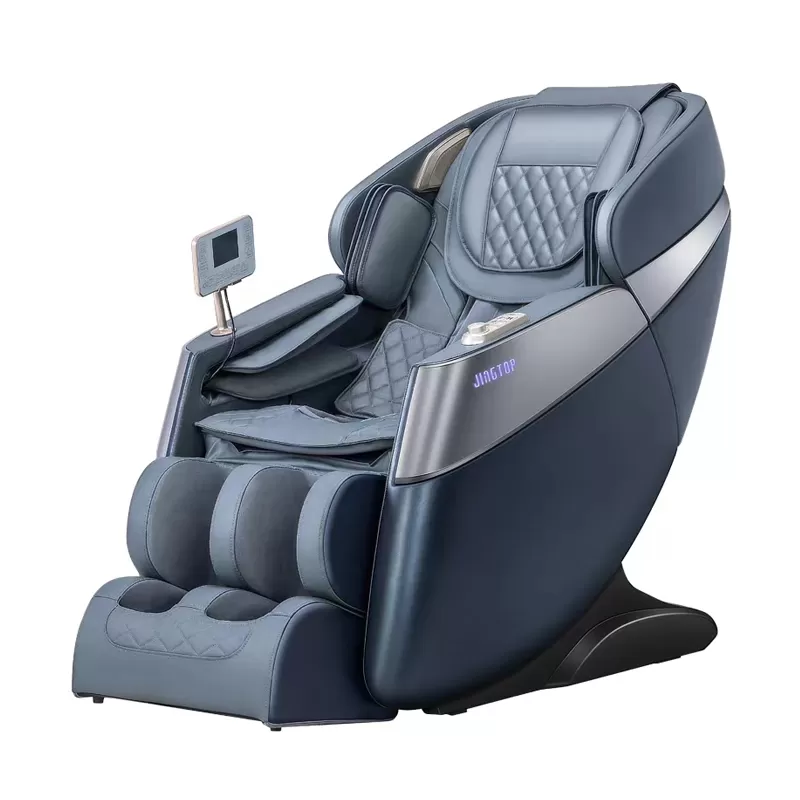
1. Technical Due Diligence: Motors, Heat, and Power Safety
The core components of any vibrating back massager determine both product longevity and return rates. Procurement teams should audit the following internal components before signing any purchase order.
Motor Architecture and Vibration Dynamics
Most budget massage products fail at the motor level. Traditional brushed direct-current (DC) motors degrade rapidly under prolonged resistance and produce excessive mechanical noise. For long-term reliability, focus on factories that specialize in high-torque, brushless DC (BLDC) motors or premium carbon-brush units rated for at least 1,000 continuous hours.
Acoustic Output: Keep operational sound levels under 50 decibels (dB) during peak vibration modes. High-frequency whine indicates poor casing dampening or low-grade motor bearings.
Frequency Range: Look for multi-speed motors delivering between 2,200 and 3,600 RPM. This range provides genuine deep-tissue stimulation rather than superficial buzzing.
Amplitude Consistency: The motor must maintain consistent vibrational displacement under load—such as when a 90kg user leans firmly against the seat back.
Thermal Integration and Material Durability
Adding heat to a vibrating back massager increases perceived value, but introduces thermal runaway risks. Suppliers should use positive temperature coefficient (PTC) ceramic elements or flexible graphene heating films rather than primitive resistance wire coils.
Graphene distributes heat across the lumbar region evenly within 90 seconds while consuming minimal battery power. Ensure the factory installs redundant NTC thermistors (Negative Temperature Coefficient sensors) that automatically cut power if temperatures exceed 45°C to 50°C. Foam choices matter, too. High-density, molded polyurethane foam holds its shape over years of use, whereas cheap cut sponge flattens within weeks.
Battery Management Systems (BMS) and Cell Quality
Battery failures ruin consumer electronics brands overnight. Demand documentation proving your manufacturer sources new, Grade-A 18650 or lithium-polymer cells from recognized brands. Your supplier must integrate a dedicated BMS circuit that protects against overcharging, over-discharging, thermal spikes, and short circuits.
2. OEM vs. ODM: Selecting the Right Sourcing Strategy
Your timeline, upfront capital, and brand positioning determine whether you should commission an original design or rebrand an existing platform.
Original Equipment Manufacturing (OEM)
Choose the OEM route if your design team has completed 3D CAD files, unique ergonomic contours, or patented strap systems. This method protects your design identity and prevents competitors from easily copying your form factor.
When selecting an OEM partner, evaluate their tool-making capabilities. In-house computer numerical control (CNC) machining and electrical discharge machining (EDM) shorten mold fabrication cycles down to 30 to 45 days. Ask for their standard tolerance thresholds; precision injection molds should maintain dimensional tolerances within ±0.05mm to prevent casing creaks and gaps.
Original Design Manufacturing (ODM)
If you need to enter the market fast without bearing five-figure non-recurring engineering (NRE) tooling costs, select an ODM model. Tier-one ODM manufacturers like Jingtuo maintain modern catalogs of pre-tested, market-ready open molds that require only brand-specific cosmetic adjustments.
Under an ODM agreement, you can modify fabric wraps, swap micro-USB ports for modern USB-C interfaces, upgrade firmware timing programs, and specify custom packaging. Verify that the ODM partner has cleared all patents on the external casing so you do not receive patent infringement notices on commercial platforms like Amazon or Walmart Marketplace.
3. Global Regulatory Compliance and Essential Testing
Never import personal wellness devices without reviewing third-party lab test reports. Importers bear strict legal liability for personal injury, house fires, or electro-magnetic interference caused by uncertified electronics.
North American Market Requirements
FCC Part 15 (Subpart B): Verifies that internal motor oscillators and switching circuits do not emit harmful radio frequency interference.
UL/ETL Standards: Whole-device listing under UL 1647 (motor-operated massage appliances) or power supply compliance under UL 1310 proves essential for domestic retail distribution.
FDA Class I Listing: If your marketing materials claim that the vibrating back massager relieves medical conditions like sciatica or chronic lumbar pain, the manufacturing facility must hold an active FDA Establishment Registration.
European Market Standards
CE Marking (EMC & LVD): Confirms adherence to the Electromagnetic Compatibility Directive (2014/30/EU) and the Low Voltage Directive (2014/35/EU).
RoHS & REACH: Ensures toxic heavy metals, phthalates, and brominated flame retardants remain strictly below legal limits in all exterior plastics and internal solder joints.
Transport and Hazardous Goods Documentation
Cordless massage devices contain lithium batteries and fall under international Dangerous Goods regulations. Ensure the factory provides verified UN38.3 test summaries, a valid Safety Data Sheet (SDS/MSDS), and drop-test packaging certifications for safe air and ocean transit.
4. On-Site Factory Audit Checklist: Separating Real Makers from Brokers
Middlemen frequently rent showroom space near production clusters to pretend they own the factories. You need to inspect operational machinery and systematic quality controls to confirm you are dealing directly with the actual producer.
Core Production Capabilities to Look For
A capable vibrating back massager factory rarely outsources every major production step. Look for these internal departments during your physical or virtual factory audit:
Injection Molding Shop: Houses clean, automated molding presses capable of handling ABS, polycarbonate, and polypropylene resins.
Surface Mount Technology (SMT) Lines: Automated PCB assembly demonstrates internal electronics expertise and superior yield control compared to manual hand-soldering.
Cut-and-Sew Department: Modern laser-cutting benches and heavy-duty industrial sewing machines that can assemble multi-layer air-mesh fabric, PU leather, and elastic retention straps cleanly.
Burn-In and Aging Rooms: Dedicated spaces where assembled massage cushions run continuously under load for 4 to 8 hours to eliminate early component failures.
Acoustic Testing Chambers: Semi-anechoic chambers used to spot-check motor decibel levels and structural vibration resonance.
Quality Control (QC) Process Execution
Do not settle for generic ISO 9001 certificates. Audit the factory's actual quality management implementation across four distinct production phases:
First, inspect Incoming Quality Control (IQC) procedures for raw motor batches, battery cells, and PCB components. Second, review In-Process Quality Control (IPQC) stations along the assembly lines. Third, evaluate Final Quality Control (FQC) protocols where operators test complete units for heating speed, switch tactile feedback, and structural integrity. Finally, demand that Outgoing Quality Control (OQC) adheres to formal Acceptance Quality Limit (AQL) standards—typically Critical 0, Major 1.0, and Minor 2.5.
5. Commercial Terms, MOQs, and Risk Mitigation
Negotiating favorable contract terms protects your working capital and safeguards your design investments over recurring production cycles.
Minimum Order Quantities (MOQs)
True manufacturers face fixed changeover costs for injection molds and fabric dyeing lines. Standard baseline MOQs for customized electronics run between 1,000 and 3,000 units. For initial market tests, negotiate a two-tier arrangement: ask the factory to accept a trial batch of 500 units if you commit to paying a small per-unit premium that is credited back against your first 3,000-unit mass production run.
Intellectual Property (IP) Protection
Sign a comprehensive, bilingual Non-Disclosure, Non-Use, Non-Circumvention (NNN) agreement governed by local courts in the manufacturing country before sending design schematics. If you fund custom tooling, ensure your contract states unequivocally that your business owns the physical steel molds and CAD files, along with the right to relocate those molds without financial penalties.
Lead Times and Component Planning
Standard mass-production cycles span 35 to 45 days following Golden Sample approval. However, seasonal raw material shortages can easily double lead times ahead of Q4 retail peaks. Work with forward-thinking factories that pre-order long-lead electronics—such as microcontrollers and high-torque motors—to build safety stock during seasonal crunches.
.webp?t=1790660851392 "vibrating back massager")
Frequently Asked Questions (FAQ)
Q1: What is the main operational difference between brushed and
brushless motors in a vibrating back massager?
A1: Brushed motors
use physical carbon brushes to transfer power, generating internal friction,
extra heat, and audible mechanical noise. They generally provide 300 to 800
hours of operating life. Brushless (BLDC) motors rely on electronic switching,
generate almost no friction, run quieter (under 45dB), and operate reliably for
well over 2,000 hours.
Q2: How long does tooling usually take for a custom OEM vibrating
massage pad?
A2: Tooling usually takes between 30 and 45 calendar
days. This timeframe covers steel mold cut-out via CNC and EDM machining,
preliminary T0/T1 test shots, structural adjustments for proper fit, and
grain-texture surface finishing on the plastic exterior.
Q3: What specific certifications are mandatory to import a cordless
vibrating back massager into the US?
A3: Importers need FCC Part 15
verification for radio-frequency emissions, UL 1642 certification for the
internal lithium battery cells, and a full UN38.3 test package with an SDS for
international transit. If the device makes targeted pain relief or medical
therapy claims, the factory must also hold an active FDA Class I medical device
registration.
Q4: How can brand owners determine if an online vendor is a genuine
factory or an intermediary?
A4: Request a live video walk-through
showing the tool-making and SMT assembly lines, review the business license's
registered business scope ("manufacturing" vs. "commercial trading"), and review
bills of lading from recent shipping records. Real factories will have dedicated
engineering teams ready to review your schematics directly.
Q5: What standard defect rate should brands negotiate in an OEM
supply contract?
A5: Contractual defect rates for portable consumer
massage units should sit below 1.5%. Top-tier suppliers will typically agree to
an AQL standard of 0 Critical, 1.0 Major, and 2.5 Minor, while providing 0.5% to
1.0% free-of-charge (FOC) complete replacement units alongside every production
run to offset warranty returns.
Choose a Manufacturing Partner Built for Scale
Scaling a private-label consumer brand requires balancing competitive unit pricing against uncompromising structural reliability. Working with a dependable supplier simplifies component sourcing, keeps quality consistent across every production batch, and ensures your orders arrive on schedule.
Whether you need a bespoke mold built from scratch or want to launch a private-label wellness product quickly, partnering with an experienced manufacturer like Jingtuo gives your business access to modern assembly lines, verified compliance programs, and responsive engineering support. Contact our sourcing team today to review your bill of materials, discuss production feasibility, and receive an itemized manufacturing estimate for your project.
.webp "OEM/ODM Sourcing Guide: How to Choose a Reliable Vibrating Back Massager Manufacturer")
.webp "The Best Thigh Massager You Can Buy: Top-Rated Air Compression Devices Reviewed")
.webp "The Future of Leg Air Compression: 2026 Trends in Smart Massage Device Manufacturing")