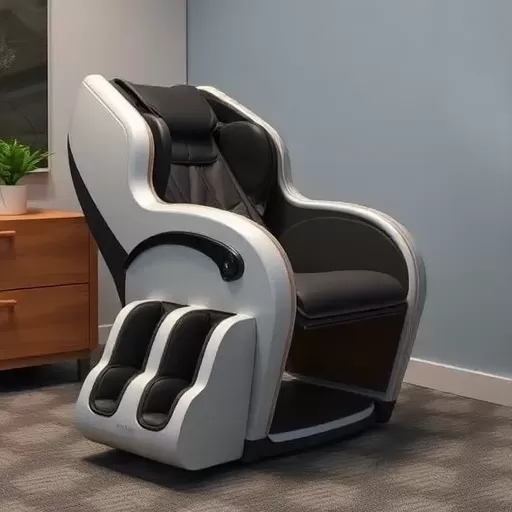

Global demand for personal wellness hardware continues to expand across retail, medical distribution, and e-commerce channels. Within this sector, therapeutic devices targeting the spine represent a major market segment. Importers, brand owners, and procurement personnel seeking to launch or expand product offerings must evaluate structural design, motor performance, and material longevity. Successfully specifying a market-ready self massager for neck and back relies on understanding the interplay between mechanical torque, thermal regulation, and structural ergonomics.
Navigating the supply chain requires moving beyond superficial aesthetics to analyze internal assembly metrics. Mass-market returns often stem from motor stalls, gear stripping, or thermal cut-offs caused by inadequate component selection. By establishing rigorous manufacturing requirements early in the product development cycle, B2B buyers can lower warranty defect rates, ensure regulatory compliance across targeted sales regions, and secure sustainable profit margins.
.webp?t=1786357096485 "self massager for neck and back")
Biomechanical Considerations in Massager Engineering
Human anatomy requires distinct mechanical forces depending on the targeted muscular group. Cervical muscles, such as the upper trapezius and levator scapulae, demand precise, moderate pressure with flexible contact points to avoid pushing against vertebra processes. Conversely, the lumbar region requires deeper tissue manipulation to relieve tension in the erector spinae and surrounding fascia.
When engineering a self massager for neck and back applications, mechanical node geometry directly impacts therapeutic effectiveness. Standard dual-node rotational systems often fail to adapt to varying body contours. Advanced designs utilize asymmetrical node clusters that replicate thumb-and-palm kneading techniques. These multi-axial node assemblies rotate on off-center shafts, varying the contact depth dynamically during rotation cycles.
Anatomical Targeting and Pressure Distribution
Pressure application must be balanced against tissue sensitivity. Device housings must maintain structural rigidity under loads exceeding 15 kilograms without causing internal gear binding. Key mechanical factors include:
Node Radius and Spacing: Primary nodes require an outer radius between 18mm and 25mm to distribute force without causing localized bruising along paracervical tissues.
Angular Articulation: Incorporating flexible armatures or elastic suspension systems allows massage heads to pivot up to 15 degrees, conforming automatically to shoulder contours.
Stroke Amplitude: For percussive or dual-action models, stroke length must remain calibrated between 6mm and 10mm to penetrate deep tissue layers without jarring delicate spinal structures.
Drive Systems and Internal Component Architecture
The core functionality of any electromechanical recovery device rests on its internal drive assembly. High-volume consumer returns are frequently traced to underpowered drive systems that stall under normal body weight application. Specifying industrial-grade drive components prevents field failures and extends product service life.
Motor selection dictates noise generation, heat dissipation, and torque delivery. While brushed direct-current (DC) motors offer lower initial unit costs, they generate higher friction, operational noise, and thermal decay over extended operational cycles. High-torque brushless DC motors or reinforced copper-wound motors provide smoother rotational output and lower noise thresholds, remaining below 48 decibels under load.
Gearbox Integrity and Torque Multipliers
Motor output must be stepped down through reduction gearing to convert high rotations per minute into functional, high-torque kneading cycles. Common failure points occur when factories utilize pure polyoxymethylene (POM) plastic gears in high-stress positions. High-grade self massager for neck and back builds incorporate hybrid gearboxes, pairing steel worm drives with reinforced nylon-fiber secondary gears. This combination reduces operational gear chatter while preventing teeth shearing under sudden stall conditions.
Thermal Therapy Modules and Electronic Control
Integrating thermal functionality enhances muscle relaxation by increasing local blood flow before mechanical kneading occurs. Incorporating heating elements requires strict electronic safeguards to prevent thermal runaway and housing deformation. Infrared heating circuits should be embedded directly behind heat-resistant mesh panels, operating within a controlled temperature window of 40°C to 45°C.
At Jingtuo, electronic sub-assemblies are integrated with Negative Temperature Coefficient (NTC) thermistors to monitor surface and board temperatures in real time. Automatic shut-off timers, typically programmed for 15-minute operational cycles, prevent continuous operation that could cause cutaneous discomfort or strain motor windings.
Power Management and Battery Cell Selection
Portable devices require robust lithium-ion power packs capable of delivering stable voltage under fluctuating motor loads. Sourcing decisions must prioritize battery safety certifications alongside raw milliamp-hour capacity.
Cell Chemistry and Quality: Utilizing UN38.3 and UL1642 certified 18650 or 21700 lithium-ion cells prevents capacity degradation over repeated charge-discharge cycles.
Protection Circuit Modules (PCM): Integrated PCM boards safeguard against over-charging, over-discharging, short-circuiting, and current surges during heavy stall loads.
Fast-Charging Protocols: USB Type-C Power Delivery (PD) controllers allow universal charging compatibility, simplifying international distribution logistics.
Material Selection and Housing Ergonomics
Outer casing materials determine both tactile feel and long-term wear resistance. Massagers designed for neck and lumbar placement undergo continuous friction, body oil exposure, and mechanical stress. Using low-grade synthetic leathers leads to surface cracking and peeling within months of consumer use.
Specifying high-grade Polyurethane (PU) leather or thermoplastic elastomers (TPE) ensures surface integrity across varying humidity levels. Wear-prone zones—specifically the fabric layer covering rotating nodes—require double-layer sandwich mesh. This material allows maximum heat transfer while protecting internal moving components from dust ingress and mechanical snagging.
Structural housings molded from Acrylonitrile Butadiene Styrene (ABS) or polycarbonate blends provide high impact resistance during transit and daily handling. Internal ribbing along stress points prevents casing flex when users lean heavily against the device during lower back applications.
Manufacturing Quality Control Protocols
Establishing commercial-grade manufacturing reliability requires rigorous quality assurance steps across incoming raw materials, sub-assembly testing, and finished product auditing. Overseas buyers must demand standardized testing metrics from contract manufacturers prior to mass production approval.
Reliable production facilities run automated continuous-load testing rigs where devices operate under 12-to-18-kilogram dynamic weights for over 500 consecutive cycles. Environmental test chambers simulate extreme transport conditions, verifying that plastic components and internal solder joints tolerate temperature swings from -20°C to 60°C without mechanical failure.
A high-performing self massager for neck and back inventory line requires a defect rate below 0.5% at the incoming inspection stage. Partnering with suppliers who maintain ISO9001 and ISO13485 quality management systems ensures systematic tracking of component batches from raw silicon to final packaging.
Regulatory Compliance and Global Market Entry
Distributing personal care hardware globally requires navigating regional regulatory compliance standards. Non-compliant shipments risk customs detention, financial penalties, or forced market recalls. Sourcing strategies must account for electrical safety, electromagnetic compatibility, and chemical safety mandates applicable to target markets.
North American Market: Devices require FCC Part 15 Class B compliance for electromagnetic interference, alongside UL/ETL electrical safety testing for line-powered adapters and lithium battery packs.
European Union Market: Products must bear the CE mark, backed by documented compliance with the Low Voltage Directive (LVD), Electromagnetic Compatibility Directive (EMC), and RoHS/REACH environmental safety standards.
Global Markets: CB scheme test reports streamline secondary certifications across Asia, Australia, and South America, avoiding duplicate laboratory testing procedures.
.webp?t=1786357096485 "self massager for neck and back")
OEM and ODM Customization Capabilities
Differentiating a product line in competitive retail spaces relies on custom hardware modifications, unique industrial design, and proprietary control algorithms. Working with an experienced original design manufacturer allows brand owners to alter node motion profiles, customize thermal settings, and modify ergonomic strap placements.
Jingtuo provides comprehensive OEM and ODM support, translating conceptual hand sketches into validated 3D CAD models, rapid prototype prints, and production tooling. Customization options extend from custom colorways and logo silkscreening to complete PCB design for smart app connectivity via Bluetooth protocols.
Frequently Asked Questions
1. What are the key motor specifications to evaluate when sourcing a self massager for neck and back?
Buyers should look for high-torque brushless DC motors or reinforced copper-wound motors capable of delivering minimum stall torque values above 2.5 Nm. Operational noise levels should remain below 50 decibels under load, and motor assemblies should incorporate thermal overload switches to prevent field failures.
2. How do internal gear materials impact product lifespan in cervical and lumbar massagers?
Devices built entirely with low-cost plastic gears tend to strip or wear down under repeated user weight pressure. High-durability designs utilize hybrid planetary or worm gear configurations combining precision steel gears with reinforced nylon components, ensuring higher load capacity and quieter operation.
3. What certifications are required to sell portable massagers in Western markets?
Primary requirements include CE, RoHS, and REACH for the European Union, alongside FCC and UL/ETL safety testing for North America. If the device contains lithium batteries, UN38.3 transport safety documentation and MSDS reports are mandatory for international air and sea freight clearance.
4. What is the typical production lead time for customized massager orders?
Standard lead times for high-volume OEM orders range between 35 and 45 days following final sample approval and deposit confirmation. Initial tooling development for full ODM custom-molded projects typically adds 40 to 60 days for mold fabrication, initial sampling, and structural adjustments.
5. How does thermal therapy integration affect battery life on cordless units?
Activating resistive heating elements increases current draw significantly, often reducing single-charge battery runtimes by 30% to 40%. Utilizing smart pulse-width modulation (PWM) to control heat cycles alongside high-density 21700 lithium cells helps maintain operational runtimes above 90 minutes with heat enabled.
Partner with Jingtuo for Massager Manufacturing
Developing a high-performing self massager for neck and back product line requires precise engineering, rigorous material selection, and proven factory quality management systems. As a specialized manufacturer of personal recovery equipment, Jingtuo provides turnkey production solutions tailored to global brand requirements.
Whether expanding an existing health and wellness portfolio or engineering a proprietary ODM massager design, our technical team provides full support through prototyping, testing, tooling, and mass assembly. Direct inquiries regarding factory audits, volume pricing schedules, or custom engineering specifications to our B2B project managers atsale02@fj-jingtop.com.
.webp "The Best Thigh Massager You Can Buy: Top-Rated Air Compression Devices Reviewed")
.webp "The Future of Leg Air Compression: 2026 Trends in Smart Massage Device Manufacturing")